

In the world of craft brewing, success is just as much reliant on marketing and labeling as it is on producing a great product. So it’s no surprise that as competition in the craft brewing industry continues to rise, breweries are constantly one-upping and outwitting each other with clever names for their beer.
As a writer and a craft beer drinker, I particularly like that aspect of the industry. While I don’t choose to buy a beer solely based on its labeling, the creativity and wordplay is something that I’ve always paid attention to. I have a strong and tolerant sense of humor, so often times the edgier and funnier the label, the better.
With all that said, it’s probably still a good idea as a critical thinker to consider whether or not there are boundaries or limits being pushed when it comes to craft beer branding and labeling. Not to mention that from a business perspective, it’s probably a good idea to consider whether or not these kinds of decisions are alienating potential consumers.
Just last month, beer-advertising executive Dan Fox wrote an article for The Drinks Business suggesting that craft beer companies are becoming irresponsible with their marketing. He claims that craft breweries are getting away with suggestive advertising that big beer industry giants can’t, such as labeling beers with cartoony characters or slogans that target young audiences and encourage irresponsible drinking.
Here’s Fox’s break down of some current craft beer labeling:
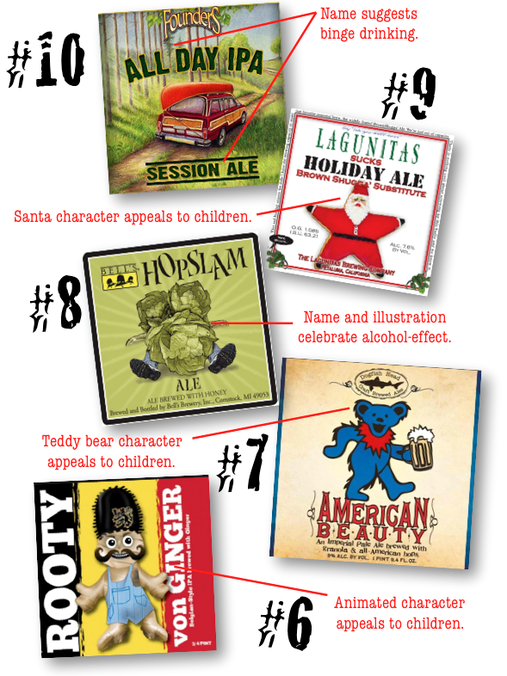
Personally, I find these labels to be harmless for the most part. His critique comes across as a little oversensitive. An “All Day IPA” could be suggestive of drinking all day, but adults are responsible for their own behavior, and I have faith that most aren’t going to base their actual decisions on a catchy slogan.
There are in my opinion much larger and more concrete issues with craft beer labeling. Take, for example, the objectifying of women. It’s no secret that beer advertising in general is male oriented and often womanizing. Throw in the boundary pushing tendencies of craft beer marketing and you’ve got some questionable labeling that does warrant careful examination.
According to bitchbeer.org, craft breweries know exactly “how to alienate female beer drinkers in one easy step”. The organization’s mission is to make craft beer more attractive to women, but surely it’s difficult to do so when some beers are labeled like this:
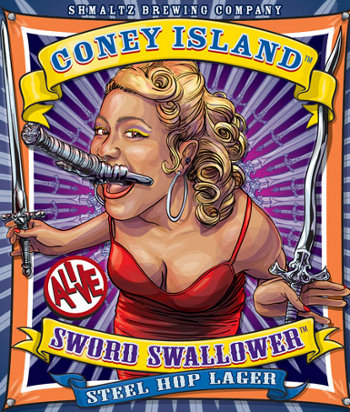

From examples like these one can get a clearer understanding of just how major an impact potentially offensive or inappropriate labeling can have on reaching customers. Not to mention the impact it could have on the company image itself. As craft brewing becomes increasingly popular and competitive, it may be wise for brewers to think more carefully about what their labels are saying about their breweries. It could cost them their reputation and dollar signs if they don’t.
 Brenden Lynch