via ninkasibrewing.com


This week, I had the pleasure of speaking with Ali AAsum, the communications manager at Ninkasi Brewing. My PR instructor put me in touch with her, and she was gracious enough to sit down with me for 20 or 30 minutes to talk about PR in the craft brewing industry.

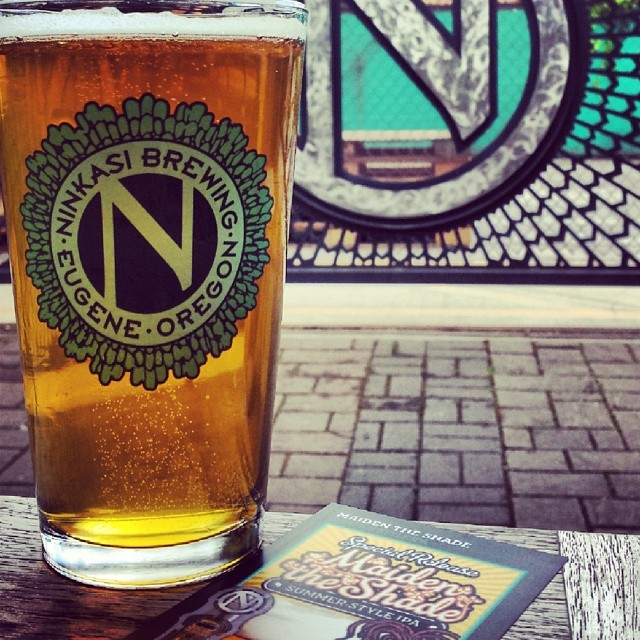
Before taking a seat in the outdoor area of the Ninkasi tasting room, I enthusiastically accepted a Dawn of the Red Ale (which, by the way, is delicious). I had prepared a few questions, and my intent was to get an idea of what PR work in the craft brewing industry might look like.

We started our conversation with a little background info. Ali explained to me that her previous experience included working for a PR agency in Portland and a marketing company in Eugene. The significance of those experiences, most notably in the PR agency, was that she got to work with a host of different clients. Many would likely agree that agency work is great for discovering the types of clients you like to work for, and is a typical starting point for many emerging PR professionals.

Knowing that my path has set me towards PR work in craft brewing, I was eager to hear what Ali’s transition was like as she began working for Ninkasi. She told me that working in-house has allowed her to focus and immerse herself in one industry that she is interested in. While that seems pretty obvious, it is worth noting that working in-house is very different from working with several clients in an agency. The work is much different too.

Ali then explained to me that much of what she does for Ninkasi has to do with product releases. When a new beer is released, her job is to send out news and press releases to gain coverage and garner attention towards the new product. This means reaching out to those on her media list, industry professionals, bloggers and craft beer advocate organizations. In order to do this job well and set yourself apart from others, Ali says that you have to be responsive with your communications and pay close attention to details. This means checking your email constantly and providing information as soon as it’s needed, among other things.

As for the brewery itself, I wanted to get an idea of the types of PR challenges that a business like Ninkasi might face. Ali alluded to Ninkasi’s rapid growth and successful branding, and how it might affect their local appeal as a craft brewery in Eugene. As Ninkasi continues to expand, it will undoubtedly be tricky to maintain that appeal and rally the same kind of local support it has received thus far. I have no doubt, however, that Ninkasi will navigate those waters just fine.

Over my last few sips of beer, I asked Ali to leave me with some advice for aspiring PR professionals. Her reply was straightforward. “Never say no, and be open to anything.” In other words, do more than what is expected of you and take any opportunity you can get because you never know where it might lead.

Her advice could certainly apply to any occupation, but nonetheless it was very helpful. All in all, I must say it was a productive little chat and I was able to gain some valuable insights. I hope to be sitting on the other side of the table one day, in which case I will pay her advice forward.

Thanks again, Ali.

Cheers.


Embed from Getty Images

A word to the wise, you may want to stare into your mass-market pint of beer more often. Not because you should get drunk more, but because you ought to be concerned with your health.

As people become more and more aware of what’s in their food, they’re becoming more aware of what’s in their beer. After all, many of the same food ingredients that contain GMO’s and such are the same ingredients that go into making your favorite beverage.

According to BeerTutor.com, there are a number of harmful additives and preservatives contained in many beers that you should be aware of.

Which beers you ask? The most popular ones of course. If your concerned about GMO’s or worse, here’s an article that lists some beers you may want to be aware of. Now, I don’t want to suggest that all craft beer is healthier or less harmful, but there are undoubtedly some brands out there that take this stuff more seriously. What I will say with certainty, however, is that they are more delicious.

But I’ll let you decide that for yourself.

Cheers.


via craftbeer.com
via craftbeer.com


According to an online article from the Oregonian, the FDA has proposed a new rule that could dramatically affect the  win-win transaction between brewing companies and producers of livestock.

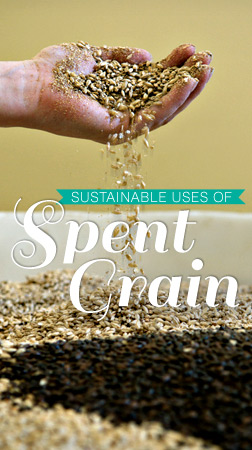
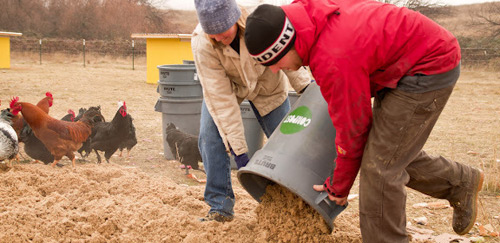
For centuries farmers have been feeding their livestock the spent grain leftover from the brewing process. A mutually beneficial transaction, many brewers are often willing to handover the nutritious, high-protein byproduct for free rather than dispose of it themselves.

The new rule would now classify brewers that supply farmers with spent grain as animal feed providers. This would require them to dry and package the spent grain, store it in closed sanitized containers and maintain records of distribution. In order to do this brewing companies would have to spend upward of $13 million per facility to finance the equipment and resources necessary to meet these regulations.

While it may sound like a good idea, there is no evidence to support that spent grain from breweries is unsafe. On the contrary, spent grains are consistently praised as being a healthy and sustainable source of livestock feed.

via craftbeer.com
via craftbeer.com

There has never been an issue of contamination, or any other event to warrant these new regulations. So what it likely means for brewers and livestock producers is a lot of wasted grain. Many craft brewers especially will be forced to either dispose of the grain in landfills or significantly raise prices to finance the equipment and resources. The business and financial impacts are quite obvious, but it will be interesting to see the PR implications this could have if the rule is enacted. Particularly in the realm of corporate social responsibility, breweries will have some difficult decisions to make. In many ways, it’s a damned if you do, damned if you don’t type of scenario.


By trashing the spent grain, they risk attracting the negative perceptions that come with adding to landfills and contributing to waste. If they raise prices to meet the regulations, they will likely have to replenish sales with the sort of appeal that says you’re paying more money for a more “responsible” product.

For me it’s a stretch either way.

I would argue that it’s a bad look on the FDA for disrupting such a natural and logical exchange of goods over a rulebook technicality. The rule would present some potentially serious challenges, leaving breweries in limbo over what to do while the poor farmers go about replacing a virtually free food supply for their livestock.


Embed from Getty Images

In regards to ethics in the blogosphere, there are varying opinions as to what guidelines a blogger should follow. As an aspiring public relations professional and journalist, I aim to hold myself to a high ethical standard.

Being credible and trustworthy is key to having a good reputation as a writer, and as a writer I want my readers to value the insights and information I provide them.

In researching codes of ethics, I came across an excellent model on CyberJournalist.net. The model they provide is a modification of the Society of Professional Journalists Code of Ethics, and it states these ethical guidelines far better than I could in my own words.

As such, I would like to adopt this code, and hold myself to it in every capacity and to the best of my ability.

A BLOGGER’S CODE OF ETHICS

Be Honest and Fair

Bloggers should be honest and fair in gathering, reporting and interpreting information.

Bloggers should:

• Never plagiarize.

• Identify and link to sources whenever feasible. The public is entitled to as much information as possible on sources’ reliability.

• Make certain that Weblog entries, quotations, headlines, photos and all other content do not misrepresent. They should not oversimplify or highlight incidents out of context.

• Never distort the content of photos without disclosing what has been changed. Image enhancement is only acceptable for technical clarity. Label montages and photo illustrations.

• Never publish information they know is inaccurate — and if publishing questionable information, make it clear it’s in doubt.

• Distinguish between advocacy, commentary and factual information. Even advocacy writing and commentary should not misrepresent fact or context.

• Distinguish factual information and commentary from advertising and shun hybrids that blur the lines between the two.

Minimize Harm

Ethical bloggers treat sources and subjects as human beings deserving of respect.

Bloggers should:

• Show compassion for those who may be affected adversely by Weblog content.

• Be sensitive when seeking or using interviews or photographs of those affected by tragedy or grief.

• Recognize that gathering and reporting information may cause harm or discomfort. Pursuit of information is not a license for arrogance.

• Recognize that private people have a greater right to control information about themselves than do public officials and others who seek power, influence or attention. Only an overriding public need can justify intrusion into anyone’s privacy.

• Show good taste. Avoid pandering to lurid curiosity. 


Be Accountable

Bloggers should:

• Admit mistakes and correct them promptly.

• Explain each Weblog’s mission and invite dialogue with the public over its content and the bloggers’ conduct.

• Disclose conflicts of interest, affiliations, activities and personal agendas.

• Deny favored treatment to advertisers and special interests and resist their pressure to influence content. When exceptions are made, disclose them fully to readers.

• Be wary of sources offering information for favors. When accepting such information, disclose the favors.

• Expose unethical practices of other bloggers.

• Abide by the same high standards to which they hold others.


Embed from Getty Images

In the new world of social media and catchy advertising, companies are certainly facing new challenges in terms of branding and rebranding their products. Everything is so visual and interactive now, and there are many competitors vying for our attention.

For even established brands, this new landscape is difficult to traverse. According to an article from the New York Times, longtime coffee industry giant Maxwell House is gearing up for a climb back to the top.

via nytimes.com
via nytimes.com


After falling to the No. 2 spot in sales behind Folgers, Maxwell has decided to roll out a 20-25 million dollar makeover campaign of their brand. In fact, they’ve enlisted six agencies to contemporize their brand on all fronts, all in an attempt to engage the future generations of consumers while holding on to the old ones.

While none of this comes across as any sort of shock, I think it’s interesting to see just how profound the advertising culture has changed over the past ten or twenty years. It’s no longer enough to produce a great product. To remain visible, you now have be much more creative and socially active with your brand.

via businessinsider.com


Established companies in the brewing industry are no exception. According to an article on rebranding from Business Insider, the Milwaukee based Pabst Brewing Company is retailoring some of its products for consumers in China. By adding a foreign tag line and fancier packaging to a new product, they are making their brand more appealing to an emerging market of Chinese beer consumers.

As multimedia advertising and creative marketing continues to become vital to business success, we are likely to see many other companies follow suit. The old and familiar will have to get hip to the new doctrine of brand development, or risk remaining in a forgotten time when a great product and a catchy slogan was enough to do the trick.

Although we are well into the age of social media, I am still very surprised (and perhaps a little annoyed) at just how integral platforms like Twitter have become for business and communication professionals alike. As a journalism and public relations student, it’s all I ever hear on the news and in classes these days. Twitter this, Twitter that. What’s trending on Twitter? A Twitter controversy (oh my!).

There’s no denying that it’s become an important place for communicators to share news and content, interact with others, and engage their followers. But just how much activity is really taking place? According to an article from the Wall Street Journal, reports show that many Twitter users may be sound asleep.

Twopcharts, a Twitter activity monitoring website, reports that 44% of the 974 million existing Twitter accounts have never sent a tweet. Furthermore, 30% have only sent 1-10 tweets, and only 13% have written at least 100 tweets.

Pretty staggering numbers, right?

I have to admit that this comes as a bit of a relief to someone like me, who reluctantly joined the Twitter arena very late in the game. I personally find it very exhausting and time consuming to constantly be tweeting, retweeting, and scrolling through my news feed, all the while maintaining my other social networks.

But this is the world we live in. It has been repeatedly power-drilled into my skull that if you aren’t using Twitter, you’re doing yourself a disservice as a communications professional. Whether or not that’s true, I can agree with and understand the value of the conversation Twitter has created. I also recognize the need to stay current with communication trends as a journalist.

So I guess I’ll just have to tweet more.

As I work on building a social media presence and increase my level of engagement, I can at least take comfort in the fact that I’m not the only one struggling to stay active on Twitter.